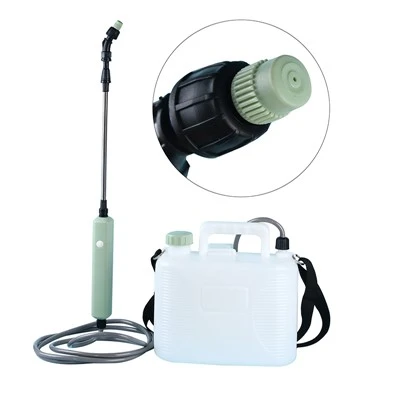


Driven by high-pressure pump output, the liquid enters the swirl chamber at high speed through tangential channels, inducing rapid rotational motion within the chamber. In accordance with the law of conservation of angular momentum, rotational velocity is inversely proportional to the radius; consequently, the closer the liquid is to the central axis, the higher the rotational velocity and the lower the static pressure. When the rotational velocity reaches a critical level, the pressure at the center of the atomizer drops to atmospheric pressure, causing the discharged liquid to form a conical annular film swirling around a central air core.
As the liquid film extends, waves generated by intense air turbulence intensify, causing the film to disintegrate into fine ligaments. Influenced by radial turbulent velocity components and the relative velocity of the surrounding air, the film breaks up into filaments; subsequently, these filaments rupture and-driven by surface tension-ultimately form a spray cloud composed of countless droplets.